
What Are the Advantages of Bülte Plastic Spacers?
Our plastic spacers and standoffs are manufactured from high-quality engineering plastics such as nylon and undergo continuous quality control. Thanks to full traceability and compliance with REACH and RoHS requirements, they meet the highest standards of quality, reliability and process safety for long-term industrial use.
✔ Proven industrial quality
✔ Lightweight alternative to metal spacers
✔ Excellent corrosion resistance
✔ Wide choice of engineering plastics
✔ Excellent chemical resistance
✔ Electrical insulation for electronic applications
✔ Reliable production with full traceability
✔ Custom-made plastic spacers manufactured to drawing


Visit our technical information page to learn more about the properties of our engineering plastics and choose the right material for your application. Technical datasheets are available on request.
Round Plastic Spacers (Unthreaded)
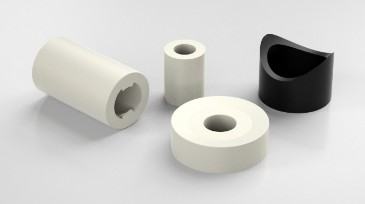
Our round plastic spacers maintain a precise distance between components and are used wherever screws, threaded rods or bolts need to be accurately guided. Bülte's plastic standoffs offer excellent dimensional accuracy and are available in a wide choice of engineering plastics, making them suitable for a broad range of industrial applications. The distinction between low-profile plastic spacers and washers is not always clear-cut. If you are looking for a thin spacer, we also recommend exploring our range of plastic washers.
The Bülte range includes round plastic spacers with:
- Inside diameter: 2.6 to 25.5 mm (suitable for screws from M2.5 to M24)
- Outside diameter: 4.0 to 40.0 mm
- Length: 2.0 to 50.0 mm
- Colours: white, black and natural.
Depending on the application, our plastic spacers are available in nylon (PA), glass fibre reinforced nylon (PA-GF), PE-HD, POM, PS and PTFE. Nylon spacers and hard plastic spacers in other materials, dimensions or special colours are available on request. We also provide free samples for business customers, allowing them to evaluate fit, material and suitability before production.
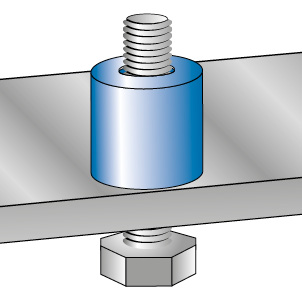
Retaining Spacers for Pre-Assembly
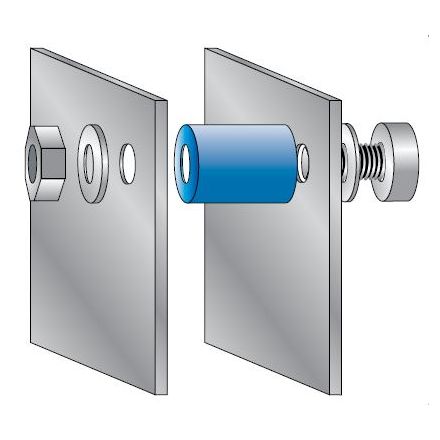
Retaining spacers simplify the pre-assembly of screws and ensure secure positioning of fasteners until final installation. Integrated retaining lips engage with the thread and hold the screw securely inside the spacer. This speeds up assembly and helps reduce installation errors. The Bülte standard range includes retaining spacers for metric screws and threads from M3 to M10, available in lengths from 5.0 to 30.0 mm.
Plastic Spacers with Reduced Hole
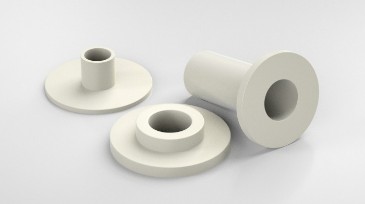
Our plastic spacers with reduced hole allow the flush mounting of screws with cylindrical heads, such as cheese head screws or hex socket (Allen) screws. Thanks to the reduced inside diameter of one of the bores, the screw head can be countersunk into the spacer. These black glass fibre reinforced nylon spacers are available in lengths from 3.0 to 60.0 mm for metric screws and threads from M2.5 to M4 and for screw heads with diameters from 4.5 to 10.3 mm.
Threaded Plastic Spacers and Standoffs
Threaded plastic spacers provide a strong and precise connection between components while maintaining a defined distance. They are widely used for mounting printed circuit boards (PCBs), electronic assemblies, enclosures, electrical cabinets, and in machinery and equipment manufacturing. Depending on the design, the standoffs feature an internal thread or a combination of internal and external threads, allowing fast, reliable and assembly-friendly installations.
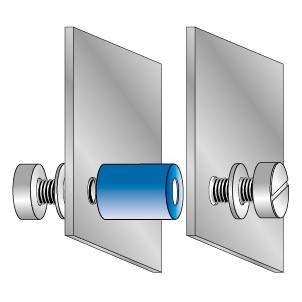
Round Standoffs with Female Thread
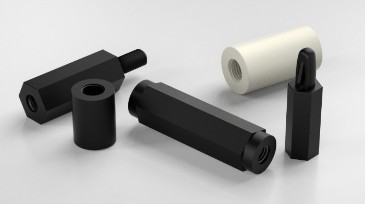
The round plastic standoffs with female thread are suitable for metric screws and threads from M2 to M5 and are available in lengths from 3.0 to 60.0 mm. They are manufactured from POM, glass fibre reinforced POM (POM-GF) or glass fibre reinforced nylon (PA-GF) and are available in black, white and natural. Versions with a through internal thread can also be used as coupling nuts.
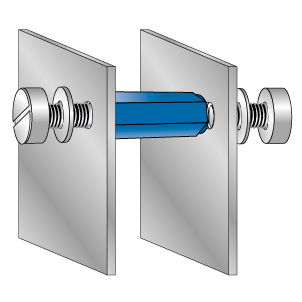
Hex Standoffs with Female Thread
Hex standoffs with female thread are designed for easy installation with a spanner or wrench while ensuring reliable torque transmission. Manufactured from black glass fibre reinforced nylon (PA-GF), they are available in lengths from 3.0 to 60.0 mm for metric screws and threads from M2 to M6. Versions with a through internal thread can also be used as coupling nuts.
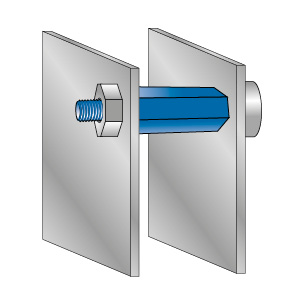
Hex Male-Female Standoffs
Hex plastic standoffs with male-female thread are available for metric thread sizes from M3 to M5 and are manufactured from nylon (PA) or glass fibre reinforced nylon (PA-GF). These hex plastic standoffs combine low weight, excellent corrosion resistance and outstanding electrical insulation, making them a high-performance alternative to metal standoffs.
Custom Plastic Spacers
Looking for plastic spacers, standoffs or spacer sleeves with custom dimensions? The Bülte team develops and manufactures custom plastic components to your drawings and technical specifications. Whether you require special dimensions, thread types, engineering plastics or colours, we supply cost-effective solutions for prototypes as well as small, medium and large production runs. Custom-made plastic spacers are available on request.
View Plastic SpacersFAQ – Plastic Spacers and Standoffs
What is a plastic spacer?
A plastic spacer maintains a precise distance between two components while allowing a screw, bolt or threaded rod to pass safely through its bore. Depending on the application, plastic spacers are available as plain or threaded spacers in cylindrical or hexagonal designs.
What are the advantages of plastic spacers?
Plastic spacers are lightweight, corrosion-resistant and electrically insulating. Many engineering plastics also offer excellent chemical resistance, making them ideal for demanding industrial applications.
Which materials are used to manufacture plastic spacers?
The standard material for plastic spacers is polyamide (PA, nylon). Depending on the application, glass fibre reinforced polyamide (PA-GF), POM, PE-HD, PP, PTFE and PVDF are also used.
What are spacers used for?
Spacers maintain a defined distance between components while guiding screws or threaded rods. They are widely used for mounting printed circuit boards (PCBs), electronic assemblies, enclosures, electrical cabinets, and in machinery and equipment manufacturing.
Which types of spacers are available?
Plastic spacers are available as plain or threaded spacers in cylindrical or hexagonal designs. The range also includes retaining standoffs, stepped bore spacers and saddle spacers for pipes.
Which spacer fits which screw?
The inside diameter of a spacer should match the diameter of the screw or threaded rod being used. Many spacers are designed according to the clearance hole diameters specified in ISO 273 for metric screws. A reference table helps you select the correct inside diameter.
How do I choose the right spacer?
The selection depends on the inside diameter, outside diameter, height, material and, where applicable, the thread type. Mechanical loads, operating temperature, and the chemical and electrical environment should also be taken into account.
Are custom-made plastic spacers available?
Yes. Plastic spacers can be manufactured to drawing with custom dimensions, threads, materials or colours. Bespoke solutions are suitable for prototypes as well as small, medium and large production runs.
Are plastic spacers electrically insulating?
Yes. Most engineering plastics provide excellent electrical insulation properties. Plastic spacers are therefore widely used in electronics, electrical engineering and electrical enclosures.
Are plastic spacers resistant to chemicals and high temperatures?
Resistance depends on the material used. Materials such as PA, POM, PTFE and PVDF provide excellent chemical and temperature resistance, depending on the application.